By Pushkar Deshpande
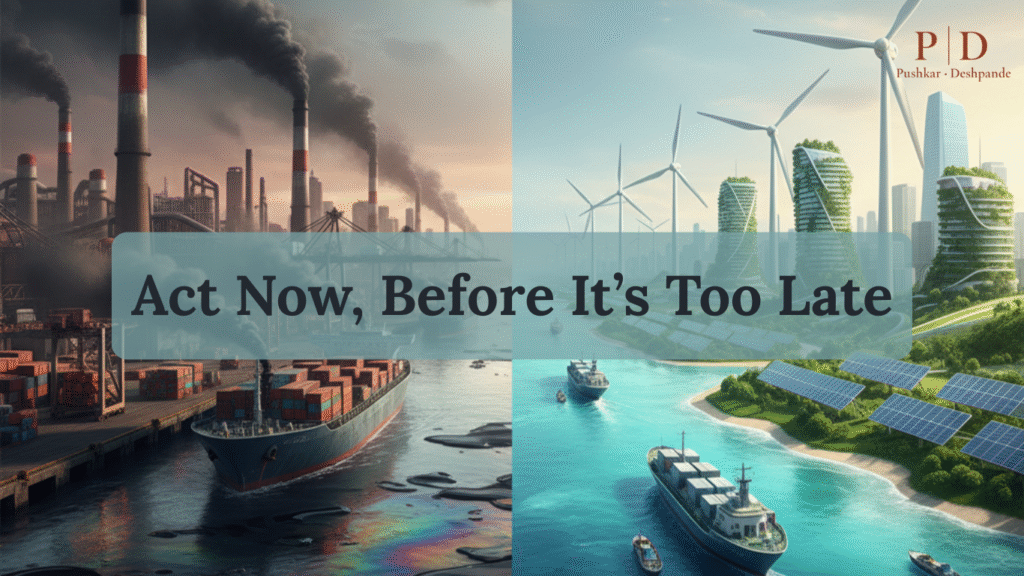
Our generation has inherited a planet standing at the edge of environmental collapse. Climate change is no longer a distant threat; it is a current reality, and the window for meaningful action is rapidly closing. How we reached this point is a matter of historical debate, but what is undeniable is that global inequality plays a decisive role in how environmental protection is approached, prioritized, and enforced.
The reality is harsh: environmental responsibility is often dictated by economic comfort.
Developing nations argue, with some justification, that today’s environmental crisis is largely the consequence of industrial expansion in developed countries over the last century. They contend that they deserve the same opportunity to grow, modernize, and uplift their populations, even if it comes at an environmental cost. This argument is morally understandable, but ethically fragile. It offers explanation, not solution.
As a result, global environmental strategies remain deeply inconsistent. Regulation varies not because of science, but because of economics. Enforcement is not determined by urgency, but by affordability.
India offers a clear and relatable example.
Environmental laws exist. Pollution control boards function. Legislations are in place. Yet, implementation often appears compromised. While lack of funding and infrastructure plays a role, the larger truth is more uncomfortable, we need industries. We need trade. We need jobs. We need economic momentum. Environmental protection frequently becomes an inconvenient priority when it stands against employment and industrial growth.
Air, water, soil, and sound pollution continue to deteriorate the quality of life. Still, there is silent social acceptance because the same polluting entities are often the ones providing livelihoods to daily wage earners. Morally, it becomes a trade-off between survival and sustainability. Practically, it becomes delay disguised as development.
If viewed from a global lens, India, and countries like it, could reasonably say: You built your wealth over a century of unchecked environmental damage. Now that you are prosperous, you ask us to pause our growth so the planet can heal.
This disparity does not end on land. It extends deep into the oceans.
At sea, the International Maritime Organization (IMO) enforces some of the most stringent environmental regulations in the world. Pollution prevention rules govern oil, chemicals, sewage, garbage, and even ballast water sourced from foreign regions. Countries such as the United States, Australia, and increasingly China, enforce these laws with remarkable strictness. Non-compliant ships face serious consequences.
India, however, continues to struggle to maintain clean coastal waters. Progress has been made, but harsh enforcement presents a dilemma. India is heavily import-dependent. Aggressively regulating foreign ships could slow trade, disrupt supply chains, and weaken economic stability. In the case of petroleum imports, tightening control is not a choice, it is a risk the country cannot afford.
Economic dependence weakens environmental authority.
A striking example of this contradiction can be seen in the LPG propane trade route between the United States and Indonesia. Despite the availability of closer suppliers, ships routinely travel this vast route due to trade agreements and strategic partnerships.
IMO regulations require modern ships to burn cleaner fuel to meet emission norms. Gas carriers typically burn their own cargo, in this case, propane, which is both compliant and environmentally sound. Burning propane would be cheaper and significantly greener than burning heavy fuel oil.
However, this logical solution presents a commercial problem.
Using propane as fuel means less propane is delivered at the destination. For a country like Indonesia, where propane demand is high and supply is critical, every unit of cargo is valuable. Losing even a small volume is unacceptable. As a result, ships are effectively forced to burn dirty, heavy oil for weeks, sometimes 40 days at 40 metric tonnes per day, simply to ensure that the cargo arrives untouched.
The ship is environmentally capable. The regulation is clear. The technology exists.
Yet the system forces pollution because commerce outweighs compliance.
This is the hypocrisy of global environmental strategy.
We celebrate regulations, applaud treaties, and hold international summits, yet when environment and economy collide, economy almost always wins. Developed countries enforce strict standards where it does not hurt their dependencies. Developing nations resist harsh enforcement where it threatens survival.
Until the world accepts that environmental responsibility must be decoupled from economic fear, real change will remain superficial.
The planet does not recognize GDP.
It does not understand trade agreements.
It only responds to emissions, pollutants, and irreversible damage.
And time, unlike trade, cannot be renegotiated.